Jun/18/2026
Plain Weave vs. Twill Flannel: Which Fabric Construction Actually Performs Better
.flannel-article {
font-family: 'Georgia', 'Times New Roman', serif;
color: #2B2620;
line-height: 1.8;
max-width: 1560px;
margin: 0 auto;
background-color: #F7F2E7;
padding: 0 4px;
}
.flannel-article * { box-sizing: border-box; }
.flannel-article p, .flannel-article li, .flannel-article td, .flannel-article th {
font-family: 'Helvetica Neue', Arial, sans-serif;
}
.flannel-article p,
.flannel-article .label-tag,
.flannel-article .selvage-note,
.flannel-article ul,
.flannel-article ol,
.flannel-article .spec-grid {
width: 100%;
max-width: 100%;
}
/* woven crosshatch divider - the signature motif */
.flannel-article .weave-divider {
height: 14px;
margin: 38px 0;
background-image:
repeating-linear-gradient(45deg, #DFB625 0, #DFB625 2px, transparent 2px, transparent 10px),
repeating-linear-gradient(-45deg, #8C5A3C 0, #8C5A3C 2px, transparent 2px, transparent 10px);
opacity: 0.55;
}
.flannel-article h2 {
font-family: 'Georgia', serif;
font-weight: 700;
font-size: 26px;
color: #2B2620;
margin-top: 50px;
margin-bottom: 6px;
position: relative;
padding-left: 18px;
border-left: 6px solid #DFB625;
}
.flannel-article h2::after {
content: "";
display: block;
width: 60px;
height: 3px;
background: #8C5A3C;
margin-top: 10px;
}
.flannel-article h3 {
font-family: 'Georgia', serif;
font-style: italic;
font-weight: 700;
font-size: 19px;
color: #8C5A3C;
margin-top: 30px;
margin-bottom: 12px;
}
.flannel-article p {
font-size: 17px;
margin-bottom: 18px;
}
.flannel-article .label-tag {
background-color: #2B2620;
color: #F7F2E7;
border-radius: 2px;
padding: 30px 36px;
margin-bottom: 36px;
position: relative;
font-family: 'Helvetica Neue', Arial, sans-serif;
font-size: 17.5px;
}
.flannel-article .label-tag::before {
content: "FABRIC NOTE";
position: absolute;
top: -11px;
left: 36px;
background-color: #DFB625;
color: #2B2620;
font-size: 11px;
font-weight: 700;
letter-spacing: 1.5px;
padding: 4px 10px;
}
.flannel-article .label-tag strong { color: #DFB625; }
/* TABLE — forced full width, fixed layout so columns share space evenly */
.flannel-article table {
width: 100% !important;
max-width: 100% !important;
border-collapse: collapse;
margin: 24px 0 34px 0;
font-size: 15.5px;
background-color: #FFFDF8;
border: 1px solid #DCD2BC;
table-layout: fixed;
}
.flannel-article th {
background-color: #4A5A48;
color: #F7F2E7;
text-align: left;
padding: 14px 18px;
font-weight: 700;
text-transform: uppercase;
font-size: 13px;
letter-spacing: 0.6px;
}
.flannel-article td {
padding: 14px 18px;
border-bottom: 1px solid #E8E0CC;
word-wrap: break-word;
}
.flannel-article tr:nth-child(even) { background-color: #F2ECDC; }
.flannel-article ul, .flannel-article ol {
margin-bottom: 22px;
padding-left: 4px;
list-style: none;
}
.flannel-article li {
font-size: 17px;
margin-bottom: 12px;
padding-left: 24px;
position: relative;
}
.flannel-article ul li::before {
content: "—";
position: absolute;
left: 0;
color: #8C5A3C;
font-weight: 700;
}
.flannel-article ol { counter-reset: swatch; }
.flannel-article ol li {
counter-increment: swatch;
}
.flannel-article ol li::before {
content: counter(swatch) ".";
position: absolute;
left: 0;
color: #DFB625;
font-weight: 700;
font-family: Georgia, serif;
}
.flannel-article .selvage-note {
border-top: 3px double #2B2620;
border-bottom: 3px double #2B2620;
padding: 18px 4px;
margin: 28px 0;
font-family: 'Helvetica Neue', Arial, sans-serif;
font-size: 16px;
color: #4A5A48;
}
.flannel-article .selvage-note strong { color: #2B2620; }
.flannel-article .spec-grid {
display: flex;
flex-wrap: wrap;
gap: 2px;
margin: 26px 0 36px 0;
background-color: #2B2620;
}
.flannel-article .spec-card {
flex: 1 1 0;
min-width: 220px;
background-color: #F7F2E7;
padding: 22px 20px;
text-align: left;
}
.flannel-article .spec-card .spec-number {
font-family: Georgia, serif;
font-size: 30px;
font-weight: 700;
color: #8C5A3C;
display: block;
line-height: 1.1;
}
.flannel-article .spec-card .spec-label {
font-family: 'Helvetica Neue', Arial, sans-serif;
font-size: 13px;
color: #4A5A48;
text-transform: uppercase;
letter-spacing: 0.5px;
}
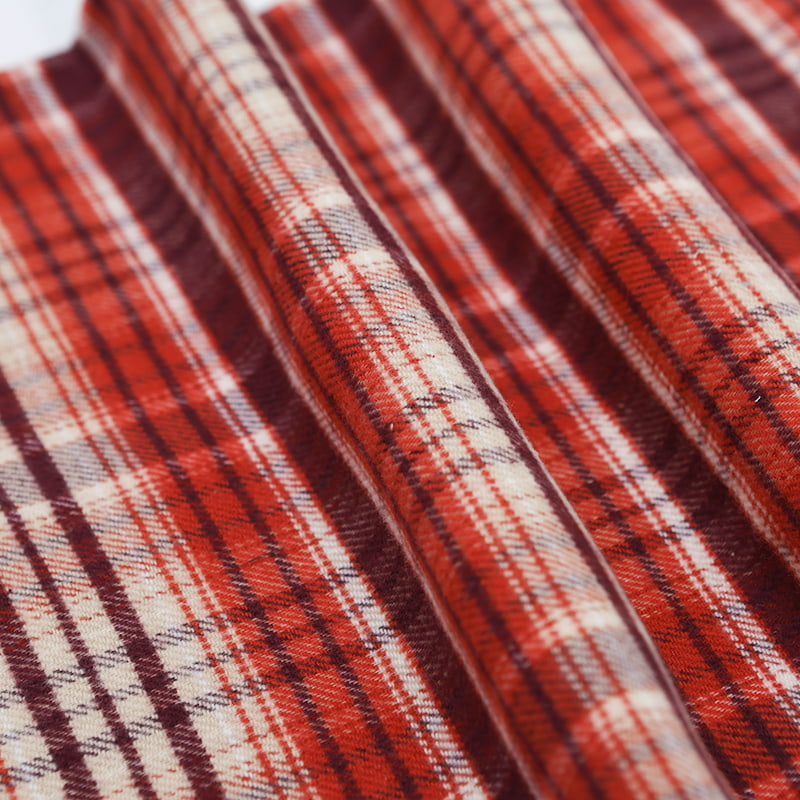
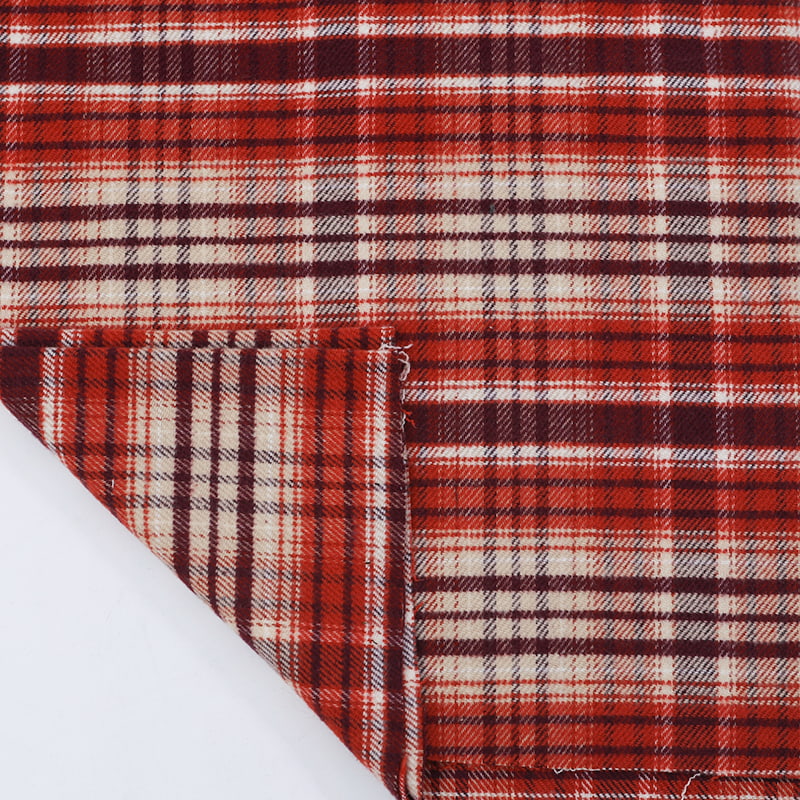
Plain flannel fabric is woven on a simple over-under weave, then mechanically brushed to raise a soft nap on one or both sides — it's that brushing process, not the weave pattern itself, that gives flannel its warmth and texture. Plain weave flannel differs from twill flannel mainly in structure and durability: plain weave is lighter, softer to the touch, and cheaper to produce, while twill flannel resists pilling and holds shape longer under repeated washing. The breakdown below compares both against brushed cotton, fleece, and synthetic flannel alternatives so you can match the fabric to the actual job it needs to do.
What "Plain" Actually Means in Flannel Construction
Flannel is defined by finishing, not by fiber. Almost any fiber — cotton, wool, synthetic blends — can be brushed into flannel, so the word "flannel" on a label tells you about surface texture, not material origin. What "plain" adds to that is a statement about the underlying weave: the yarns cross in the simplest possible over-one, under-one pattern, the same structure used in basic cotton sheeting, rather than the diagonal rib of a twill weave.
This matters because the weave determines how the fabric behaves once the nap is brushed on top of it. A plain weave has more, smaller intersection points per square inch than a twill, which means the brushing process can raise fiber more evenly across the surface, producing flannel that feels softer and more uniform but also slightly less structurally reinforced than its twill counterpart.
128–144 thread count, typical plain weave flannel
4–6 oz weight per sq. yd, lightweight shirting flannel
1–2 sides brushed (single vs. double napped)
Plain Weave Flannel vs. Twill Weave Flannel
This is the comparison that matters most when buying flannel by the yard or evaluating a finished garment, because the two weave types are suited to genuinely different uses rather than one simply being a "better" version of the other.
Property
Plain Weave Flannel
Twill Weave Flannel
Weave structure
Over-one, under-one (simple grid)
Diagonal rib pattern
Hand feel
Softer, more even nap
Slightly firmer, textured surface
Durability under abrasion
Moderate — wears thinner with repeated friction
Higher — diagonal structure resists wear better
Drape
Lighter, drapes close to the body
Slightly stiffer, holds shape better
Typical use
Shirting, pajamas, bedding, baby items
Heavier shirts, jackets, work garments
Relative cost
Lower — simpler weave, faster production
Higher — more complex loom setup
Where plain weave wins outright
For anything worn directly against skin for long stretches — pajamas, bedsheets, baby blankets, undershirts — plain weave's softer, more even nap is a genuine functional advantage, not just a marketing description. The tighter, more uniform grid also tends to brush up a denser, fluffier nap layer, which is part of why plain flannel sheets often feel warmer at a lower weight than an equivalent twill fabric.
Where twill weave wins outright
Garments that see daily friction — work shirts, jackets, anything tucked, layered, or rubbed against a backpack strap or tool belt — benefit from twill's diagonal structure, which distributes stress across more fiber crossings and resists the thin, see-through wear patches that plain weave flannel eventually develops at elbows and cuffs.
Single Nap vs. Double Nap: A Second Layer of the Comparison
Independent of weave type, flannel is also classified by how many sides are brushed. This is the second major variable buyers tend to overlook, and it changes performance almost as much as the weave choice does.
Single-napped flannel has one brushed side and one smooth side, making it lighter and slightly more breathable — common in dress-weight shirting flannel meant to be worn in layers.
Double-napped flannel is brushed on both faces, trading some breathability for noticeably higher insulation, which is why it dominates heavyweight shirts, robes, and bedding meant for cold climates.
Quick gut-check: if a flannel fabric feels fuzzy on only one side when you flip it over, it's single-napped and will run cooler. If both sides feel raised and soft, it's double-napped and will trap more heat — useful information that a fabric swatch alone won't always tell you at a glance under store lighting.
Plain Flannel vs. Brushed Cotton and Fleece
Flannel often gets lumped together with other soft, brushed fabrics, but the construction differences lead to real performance gaps.
Fabric
Construction
Warmth-to-Weight
Breathability
Plain flannel
Woven, brushed
Moderate
Good
Brushed cotton (non-flannel)
Woven, lightly brushed
Lower
Very good
Fleece
Knit, heavily brushed
High
Lower — traps heat, less airflow
The key distinction is that flannel is always woven, while fleece is knit. Knit construction traps more air and insulates more efficiently per ounce, which is why fleece outperforms flannel in raw warmth. But woven flannel breathes better, holds its shape with less stretching out over time, and tends to look more finished as an outer-facing fabric — which is why flannel remains the choice for shirts meant to be seen, while fleece dominates base layers and loungewear meant purely for warmth.
Natural Fiber vs. Synthetic Plain Flannel
Fiber content changes the comparison again, independent of weave or nap.
Cotton flannel breathes well, softens further with each wash, and is the standard for shirting and bedding, but it absorbs moisture readily and can feel damp-heavy in humid climates.
Wool flannel insulates even when damp and resists odor far longer between washes, but costs significantly more and requires more careful laundering.
Polyester or poly-blend flannel resists shrinking and pilling better than cotton over repeated machine washing, and holds color longer, but doesn't breathe as well and can develop a slightly synthetic sheen after brushing wears down.
Cotton-polyester blend flannel is the most common compromise in mass-market shirting, balancing cotton's softness with polyester's wrinkle and shrink resistance, usually in a 80/20 or 65/35 split by weight.
Reading a Flannel Label Before You Buy
A few details on a bolt label or product tag reveal more about real-world performance than the word "flannel" alone ever will:
Check listed weight in ounces per square yard — anything under 4 oz is lightweight shirting; 5 to 7 oz is mid-weight for shirts and light jackets; above 7 oz moves into heavyweight territory for outerwear and bedding meant for cold rooms.
Look for "single nap" or "double nap" in the description, since this single detail predicts warmth and breathability more reliably than fiber content alone.
Note the weave term specifically — "flannel" alone often defaults to plain weave unless "twill flannel" or "brushed twill" is stated outright.
Check fiber percentage breakdowns on blended flannel, since a fabric listed as "cotton flannel" can still legally contain a minority synthetic percentage depending on regional labeling rules.
Matching Plain Flannel to the Right Project
Pulling the comparisons together into practical guidance: plain weave, single-napped, lightweight cotton flannel is the right call for warm-weather pajamas, baby items, and breathable shirting where softness against skin matters more than abrasion resistance. Plain weave, double-napped, mid-to-heavyweight flannel suits bedding and robes where consistent warmth across a large surface area is the goal. Once a project involves heavy daily friction — work shirts, jackets, anything layered under straps or tools — the comparison tips toward twill weave flannel instead, even though it costs more and feels slightly less soft against bare skin, because the wear resistance pays for itself over the life of the garment.


 English
 中文简体
中文简体 Español



















 Fabricantes de telas teñidas con hilo personalizado